
About Louis Riel
Trigger warning:
References to violence, systemic racism, cultural erasure, weaponized starvation, & death.
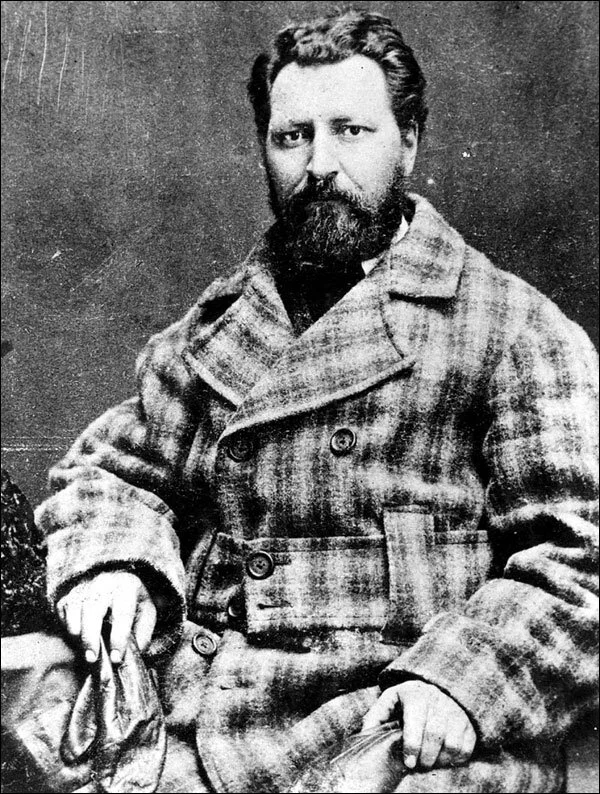
Born on the Red River Settlement in present-day Manitoba, Louis Riel (1844-1885) was a political and cultural leader for the Métis people in Canada, founder of Manitoba, and defender of Indigenous rights.
He was a central figure in multiple Métis-led resistances against the Canadian government’s rapid western expansion, including the Red River Resistance (1869-1870) and the North-West Resistance (1885).
He organized and led a provisional government to protect Métis land, language, and rights from Canadian annexation, opposing the transfer of Rupert’s Land (approximately 3.9 million square kilometres of land, spanning across seven modern-day provinces) to Canada without consent from the local Indigenous populations.
“Rupert’s Land” & Red River
In 1869, the Hudson’s Bay Company (also known as HBC, a fur-trading business that monopolized the North American fur trade for English profit) agreed to sell “Rupert’s Land” (about 3.9 million square kilometres of land) to Canada, via the British Crown.
Before the land was transferred to Canada, Canadian surveyors arrived in the Red River Colony, which was heavily populated by Métis and other Indigenous communities. The surveyors began laying out land using British-Canadian rectangular grid systems that disregarded the traditional Métis river-lot system of long, narrow farms. The Métis also had no official Canadian land titles at the time, so they faced the immediate devastating threat of losing their homes and farms.
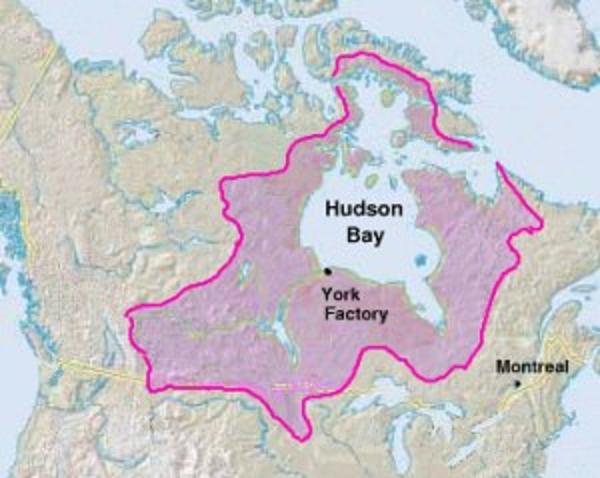
“Rupert’s Land” covers approximately 3.9 million square kilometres across central and northern North America. It covers the entire province of Manitoba, most of Saskatchewan, and some of Alberta, Ontario, Quebec, Nunavut, and Northwest Territories, as well as multiple US states.
The Red River Resistance
Concerned about their cultural, social, and political status in Red River and the Northwest, the Métis organized a provisional government called the “Métis National Committee” (MNC) and elected Riel as secretary and later president.
With Riel as leader, they seized Upper Fort Garry, an HBC fur-trade post situated between the Red and Assiniboine rivers in the Red River Colony. Seizing this land secured the Métis with crucial armaments and food, leveraging their ability to successfully negotiate with the Canadian government.
Faced with the imminent threat of displacement by Canadian surveyors, Riel and the MNC created an organized political and military resistance that ensured Métis voices were present during Confederation negotiations. Riel and the MNC successfully negotiated the Manitoba Act of 1870, which established Manitoba as a province. For the Métis, the Act provided bilingual denominational schools, judical systems, and 1.4 million acres of land.
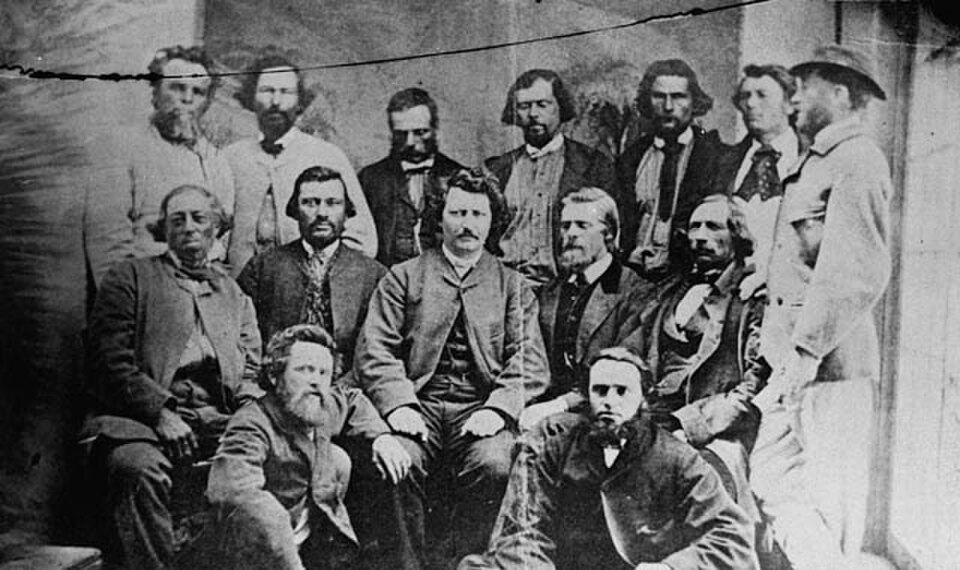
Councillors of the MNC
NOTE: Instead of receiving clear, accessible land titles, the government introduced a complex “scrip” system (certificates for land or money without protections against fraud) that made accessing and navigating their land extremely difficult. As a result, most Métis families lost their land and homes to settlers.
Aftermath of the Red River Resistance
Although the Red River Resistance successfully established a provisional Métis government, founded Manitoba as the fifth Canadian province, and protected bilingual rights in Canada, it did not protect Métis land ownership or long-term political safety from the Canadian government.
Riel was exiled for his role in the Resistance and for ordering the execution of Thomas Scott, a member of the Orange Order (a Protestant, pro-British organization that viewed the Métis as an obstacle to British-Protestant expansion for being “too Catholic,” “too Indigenous,” and “too French”—all opposing identities to the British).
The North-West Resistance
The North-West Resistance grew directly from the unresolved tensions of the Red River Resistance.
When Riel returned from exile in 1884, the Métis and First Nations in what is now modern-day Saskatchewan faced a similar crisis to the Red River Resistance: Canadian surveyors once again ignored their traditional river-lot system, and the rapid depletion of the bison population brought widespread starvation amongst the Indigenous communities.
The Resistance was led primarily by Riel, Métis military commander Gabriel Dumont, and Plains Cree and Assiniboine leaders Big Bear (Mistahimaskwa) and Poundmaker (Pitikwahanapiwiyin).
The Resistance lasted for five months in what is now Saskatchewan and Alberta, with a series of battles and other violent events.
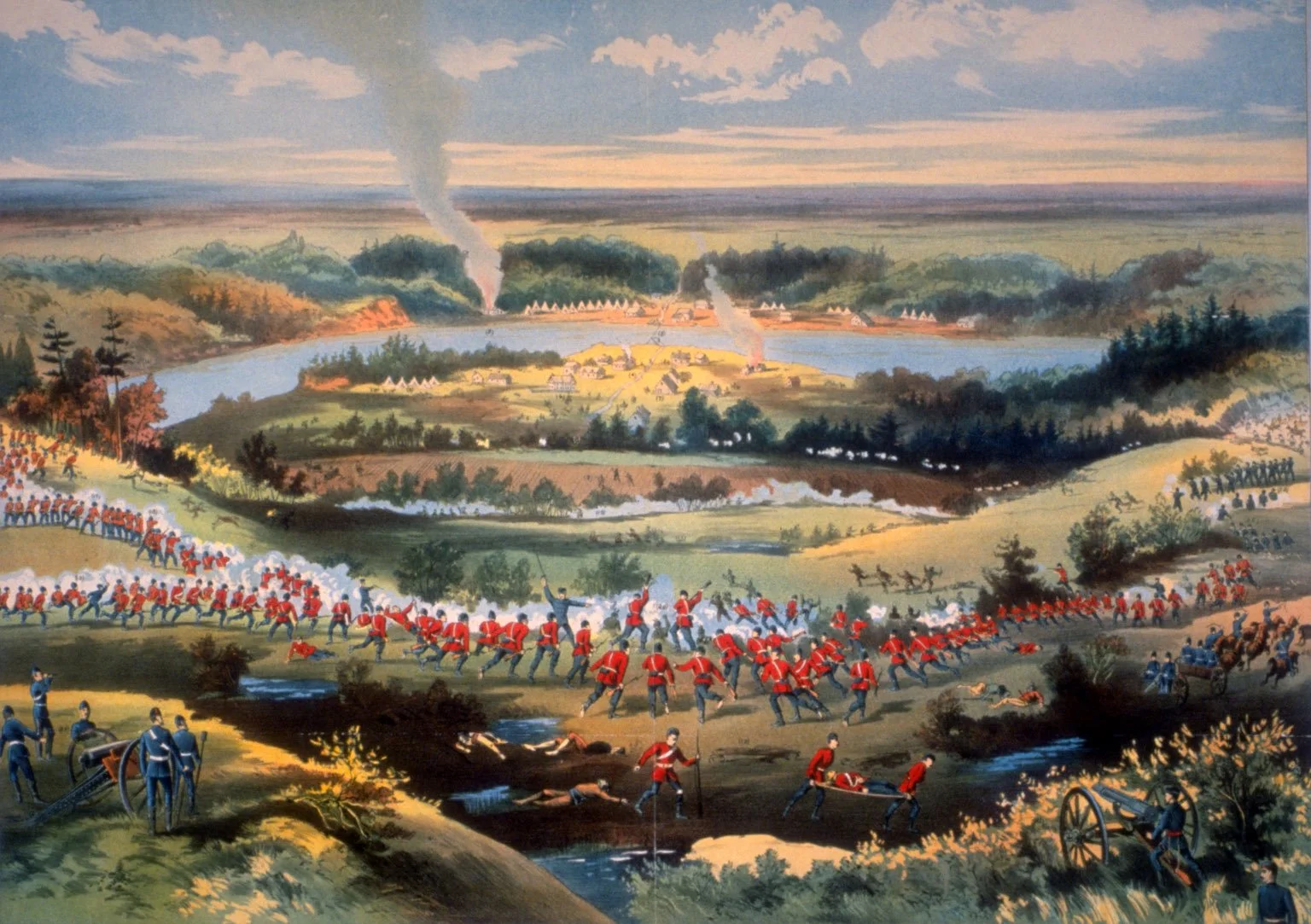
Battle of Batoche Print by Seargent Grundy (1885)
Despite initial victories for the Métis and their Indigenous allies at the Battle of Duck Lake (March 1885) and the Battle of Fish Creek (April 1885), the result was a decisive Canadian government victory, permanent enforcement of Canadian law in the West, the collapse of the MNC, the subjugation of allied First Nations, the severe long-term displacement for the Métis (something still felt to this day), and the conviction and execution of Louis Riel.
Riel’s Lasting Legacy
Today, Riel is remembered as a defender of Métis rights, self-determination, and cultural preservation. His resistance against unilateral federal expansion established the foundation for modern Métis land claims, self-government agreements, and many contemporary conversations about Indigenous sovereignty, culture, and language.
On November 16th, the anniversary of Riel’s execution, we remember his sacrifices, leadership, and resilience in protecting the rights and lives of the Métis people.
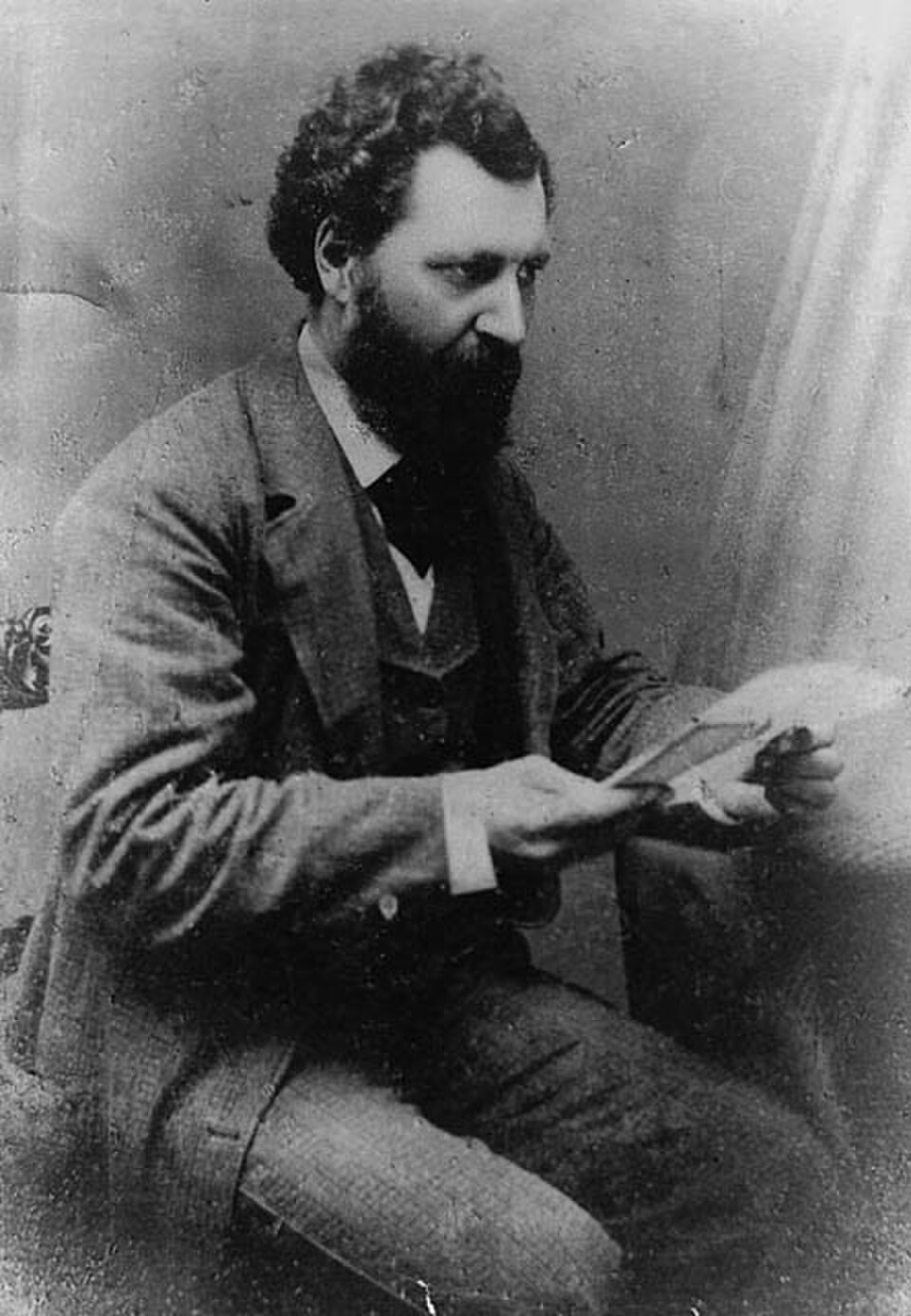
“We must cherish our inheritance. We must preserve our nationality for the youth of our future. The story should be written down to pass on.”
— Louis Riel